

Editor’s note: Since this interview was published, Avant Health has rebranded to Nara.
What It Takes to Build a Modern TPA in 2026
The self-funded benefits space has no shortage of innovation. New point solutions, alternative payment models, and AI-powered tools are entering the market constantly. But most TPAs are still running on infrastructure built for a simpler era, and the gap between what modern plan designs require and what legacy systems can deliver is growing. So what does it actually take to build a TPA that can execute on the plans employers need today?
We put that question to Sid Sinha, co-founder and CEO of Avant Health, an AI-native TPA built from the ground up for alternative plan designs. Four themes came through clearly.
The data problem is upstream of everything else
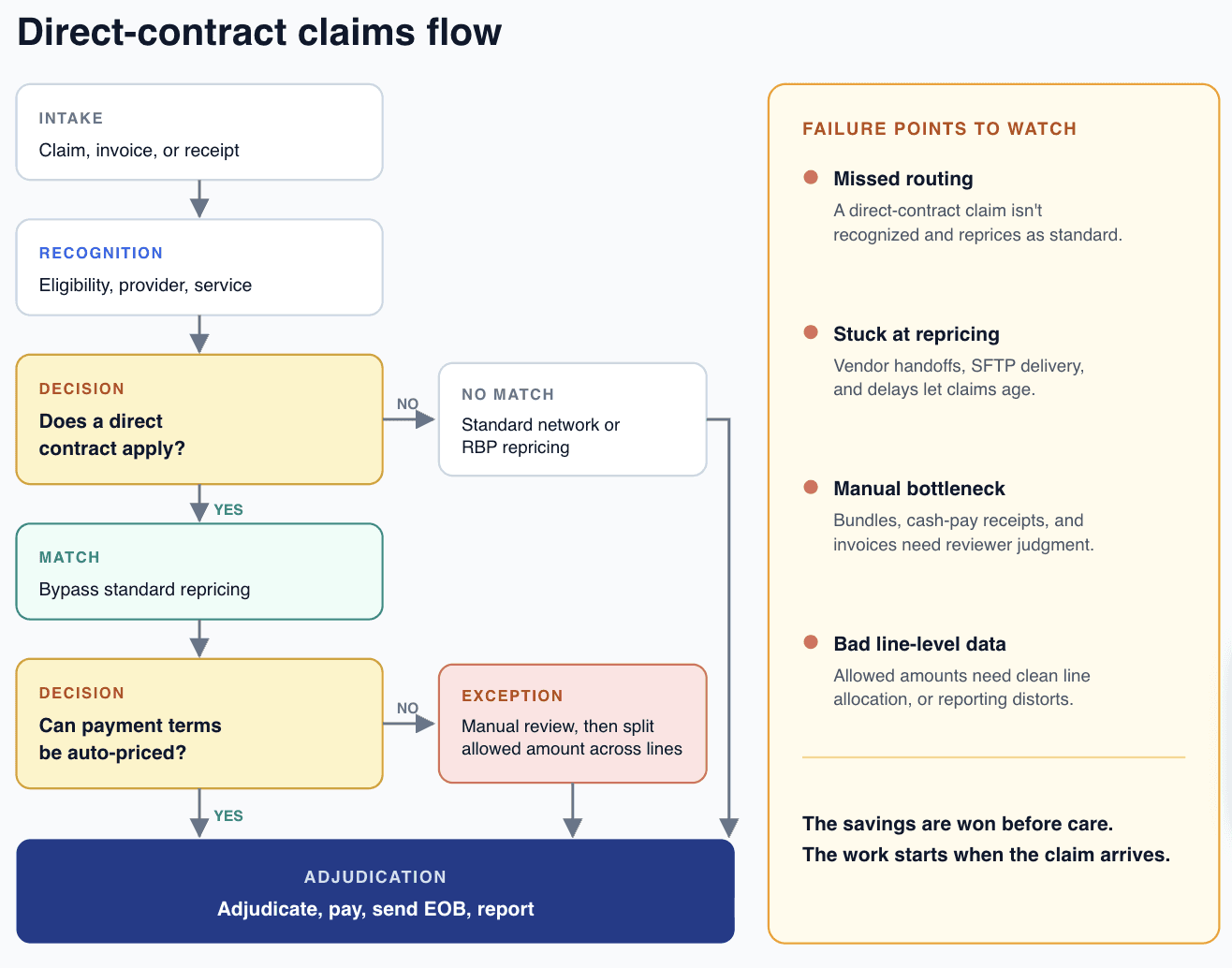
Traditional TPAs were built around predictable claim flows: standard formats, standard routing, standard networks. Reference-based pricing and cash pay break all of that. When a member walks out of a doctor’s office and photographs a bill, that image needs to become a structured, processable claim. Most TPAs have never solved this. The inability to move from unstructured to structured data at scale is the silent reason so many alternative plan designs fail in execution even when the economics look compelling on paper.
Member experience and care coordination is a data problem too
Getting costs down is only half the job. Members still need to be able to navigate the system, and that requires real-time, actionable information at the point of care. Avant integrates several different data sources, including EHR, into its AI agent, suggesting ways to manage disease and guiding members to the best treatment. To support RBP, Avant ingests provider friendliness data directly into their plans so members in a given region can see upfront which providers are safe choices, significantly reducing balance bill risk before anyone walks through a door. In cash pay models, Avant goes further and schedules appointments on behalf of members. None of this is possible without the right data infrastructure underneath it.
Multi-tier networks are an underused lever
When most TPAs think about cost reduction, they think about switching networks or adding point solutions. Sid’s answer is more structural: pair reference-based pricing with a regional or local network rather than a large national one. The combination captures significant savings from the start while solving the continuity problem that makes RBP a hard sell. Members who’ve seen the same doctor for a decade still have a path to keep that relationship. And for providers who won’t accept RBP at all, Avant directs members to self-pay, then converts that payment into a claim that applies to their deductible and out-of-pocket max. The member gets the provider they want, and the spend counts toward their coverage.
Free market dynamics, applied to group health
The thread connecting all of Avant’s design choices is a single idea: different people have different needs, and a health plan should be able to act on that. Sid describes it as air traffic control, bringing in curated solutions like GLP-1 programs and mental health networks, then using data to route members toward the right intervention at the right moment. When Avant identifies through EHR data that a member is a candidate for a GLP-1, they work with the plan sponsor and broker to get that member enrolled, potentially avoiding bariatric surgery down the line. Partners Avant works with are seeing a 17% reduction in weight and an 80% graduation rate. That kind of outcome changes the long-term cost conversation entirely.
Bottom line
At Amera, we think about all of these challenges constantly. The operational complexity Sid describes, processing unstructured claims, routing members intelligently, operationalizing multi-tier networks, acting on real-time health data, requires a clean, structured data foundation underneath it. That’s what we’re building. Our goal is to be the infrastructure layer that makes plans like Avant’s possible to run at scale.
This post is part of an ongoing series where we speak with leaders across self-insurance. We’re grateful to Sid for his time and candor. More conversations to come!
About Amera: At Amera, we are building the foundational infrastructure that will help payers fully take advantage of AI. We’re grateful to do so alongside innovative TPAs and self-funded plan administrators who are navigating the shift to modern claims processing.
Download the high-resolution PDF of our TPA Ecosystem Map