
Everyone in the self-funded space is feeling the effects of a hardening stop-loss market as we head into 2027 renewal conversations. Understanding why the market is changing (and what happens next) is increasingly important for employers, TPAs, brokers, and others that rely on stop-loss to protect self-funded plans from the financial impact of large claims.
Our goal for this post is to give each group an understanding of how this market affects them and their business, and what can be done to manage these changes.
Background: The million-dollar claim isn’t what it used to be
Stop-loss is insurance for a self-funded health plan. An employer assumes responsibility for paying its employees’ medical claims, while stop-loss coverage protects the employer against claims above a specified threshold (or deductible).
Historically, many large claims were associated with acute or relatively defined episodes of care, such as premature births, transplants, and complex surgeries.
That profile is changing. Medical advances are enabling patients with complex diseases to live longer, often while remaining on expensive therapies for years or even a lifetime. In some cancers, for example, what was once a more defined course of treatment can now become a long-term treatment regimen. At the same time, specialty drugs, gene and cell therapies, and increasingly complex care are pushing individual claims higher.
The result is a large-claim environment that looks completely different from just a few years ago. The frequency of $1M+ claims increased 46% from 2022 to 2026, while some high-cost claims now persist or recur across multiple years. As historical experience becomes less predictive of future costs, carriers and reinsurers are adjusting how they price and underwrite the risk.
Going into 2027, carriers are becoming more disciplined about what they will cover, at what price, and under what terms. Employers should prepare for higher premiums, greater underwriting scrutiny, and tighter terms as the market adapts to the changing economics of catastrophic healthcare claims.
What this means for employers: Understand the cost drivers in your claims data
Employers should prepare for higher stop-loss premiums and a market that increasingly rewards a strategic approach to managing risk. As carriers become more selective about the risks they are willing to cover, employers will need to work more closely with their benefits teams to demonstrate how they are managing the high-cost claims most likely to trigger stop-loss.
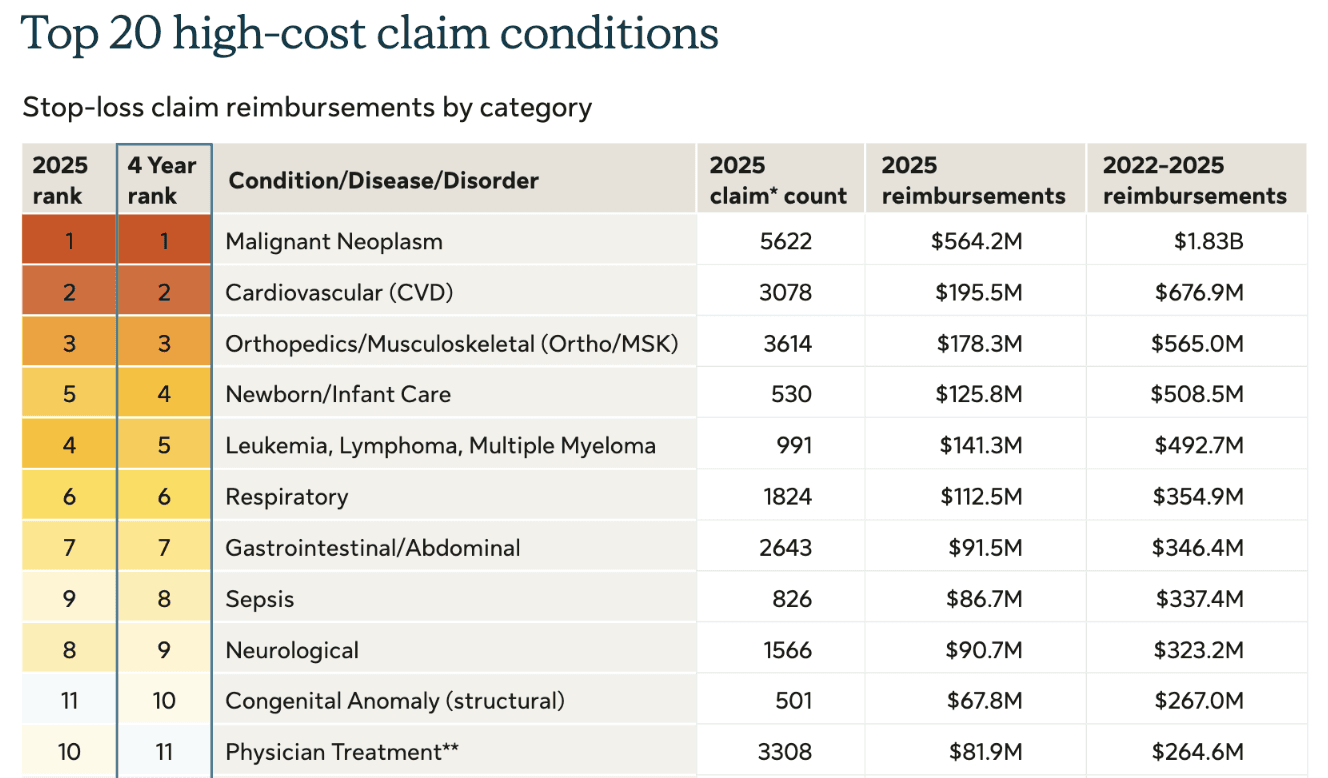
Looking upstream at the categories driving catastrophic claims can help employers identify where targeted strategies may have the greatest impact. Gene and cell therapies, oncology, specialty pharmacy, musculoskeletal care, and other high-cost areas may offer opportunities for specialized vendors, alternative contracting arrangements, and targeted plan strategies. Some stop-loss carriers may recognize these strategies in their underwriting and potentially offer more favorable pricing. To receive decrements, employers need credible data demonstrating that the strategy actually reduces costs.
Employers should also assess contract terms alongside premium when evaluating stop-loss coverage. In a harder market, changes to specific deductibles, lasers, exclusions, and other contract terms can materially change how much risk the employer is retaining. The lowest premium does not necessarily represent the lowest total risk.
What this means for TPAs: Turn reimbursement into a competitive advantage
For TPAs, a harder stop-loss market creates two challenges: retaining employer groups and managing the growing workload associated with stop-loss reimbursement.
As employers face higher costs and more difficult renewals, they may be more likely to consider alternatives, including going back to fully insured coverage. This creates risk for TPAs that primarily administer claims, but an opportunity for those that can help employers understand what is driving their costs, implement cost-reduction strategies, and evaluate alternative plan designs.
The reimbursement process for collecting from stop-loss is also becoming more demanding. More high-cost claims mean more claims to identify, submit, document, and track through reimbursement. For TPAs that rely on manual processes or have claims and eligibility data spread across multiple systems, that workload adds up quickly.
TPAs that can identify high-cost claims earlier, pull together the data carriers need, and make the reimbursement process easier to manage will be in a stronger position to retain existing groups and win new ones.
What this means for brokers and consultants: Rights matter more than rates
“Whether stop loss, medical carriers, or PBMs, one truth that has been repeatedly validated within the work we do at HTA is that rights matter more than rates. The lowest price rarely beats the greatest flexibility.” – Lee Lewis, Chief Strategy Officer, the Health Transformation Alliance
A difficult stop-loss market creates unique challenges for brokers and consultants. Employers will rely more heavily on their guidance to understand how changes in premiums, lasers, deductibles, exclusions, and other contract terms affect their overall risk.
Data will become increasingly important. Working with the TPA to understand large claims and emerging risks earlier in the renewal cycle gives brokers more time to negotiate with carriers and evaluate coverage structures.
The same data should inform cost-containment strategy. If oncology or specialty pharmacy claims are driving costs, for example, brokers can help employers evaluate strategies that address those areas. Showing carriers where the risk is coming from, and what the employer is doing to manage it, can strengthen the conversation at renewal.
What this means for individuals: Understand the mechanics of your insurance
Most people have no idea that stop-loss coverage exists, but it plays an important role in the economics of their health plan. As the cost of high-dollar medical claims rises, employers are paying more for both healthcare and the insurance that protects them against those claims.
Some of that increase reflects positive changes in medicine. New treatments are helping people survive serious diseases and manage complex conditions for longer. But many of those treatments come at a high cost. In a self-funded plan, those costs ultimately become part of the overall cost of providing healthcare to the employee population.
Employees may feel some of this pressure through higher contributions or changes to plan design. Passing higher costs on to employees is not the only option. Employers can look at what is driving their claims and find ways to manage those costs more effectively. Understanding these dynamics gives employees more context for why their healthcare costs may be changing and why their employer’s strategy matters.
What happens next?
The stop-loss market is adjusting to a new reality, and employers, TPAs, and brokers will need to adjust with it. Higher premiums and tighter underwriting are likely to continue, making it more important to understand where risk is coming from and how to manage it.
That will require better use of data, earlier conversations about emerging risks, and more coordination between employers, TPAs, brokers, and carriers. The organizations that adapt early will be better positioned to manage costs, navigate renewals, and make better decisions about how healthcare risk is managed and financed.
In the market ahead, stop-loss strategy will increasingly start long before the stop-loss renewal. Groups that can analyze their claims data and actively manage risk will be better positioned to control costs and secure favorable coverage.
Download the high-resolution PDF of our TPA Ecosystem Map