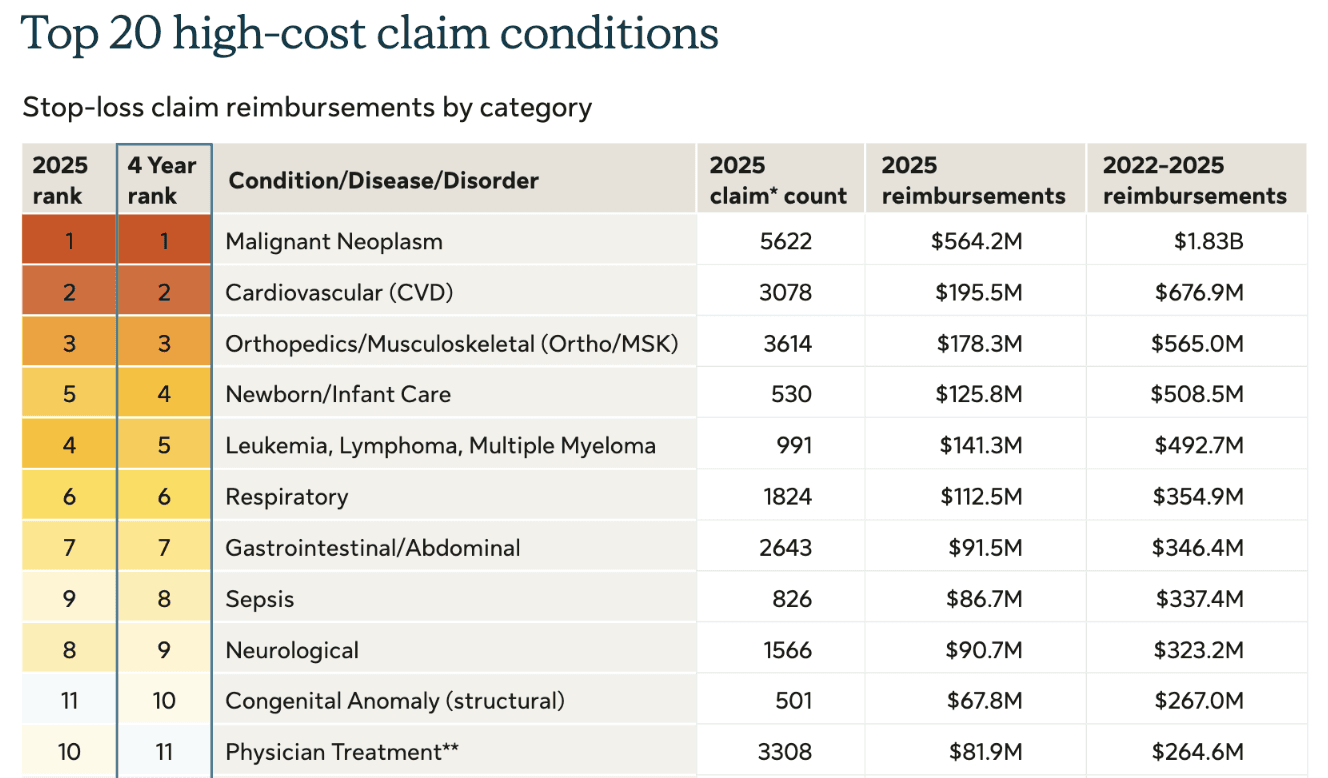
2026 marks the tenth straight year that malignant neoplasms (cancerous tumors) top the list of conditions in Sun Life’s annual High-Cost Claim and Injectable Drug report. Cancer also dominates the injectable drug list: 12 of the top 20 injectable drugs were primarily used to treat cancer, with Keytruda taking the top spot for the sixth year in a row.
Keytruda first appeared in the 2018 Sun Life report as the #12 high-cost injectable, with $3.6M in paid charges and an average cost of $86,200. In the 2026 report, Keytruda is #1, with $93M in total cost (nearly triple the #2 injectable) and an average cost of $154,300.
That is almost 26x growth in reported cost from 2017 to 2025. Digging into the Sun Life numbers, average cost increased by about 79% during that time while Sun Life’s covered lives increased by about 64%. Accounting for those factors implies that Keytruda frequency rose from about 10 users-per-million-members to 87 users-per-million-members.
In other words, approximately 70% of the increase in Keytruda spending is attributable to increased utilization rates and broader usage patterns.
What is Keytruda?
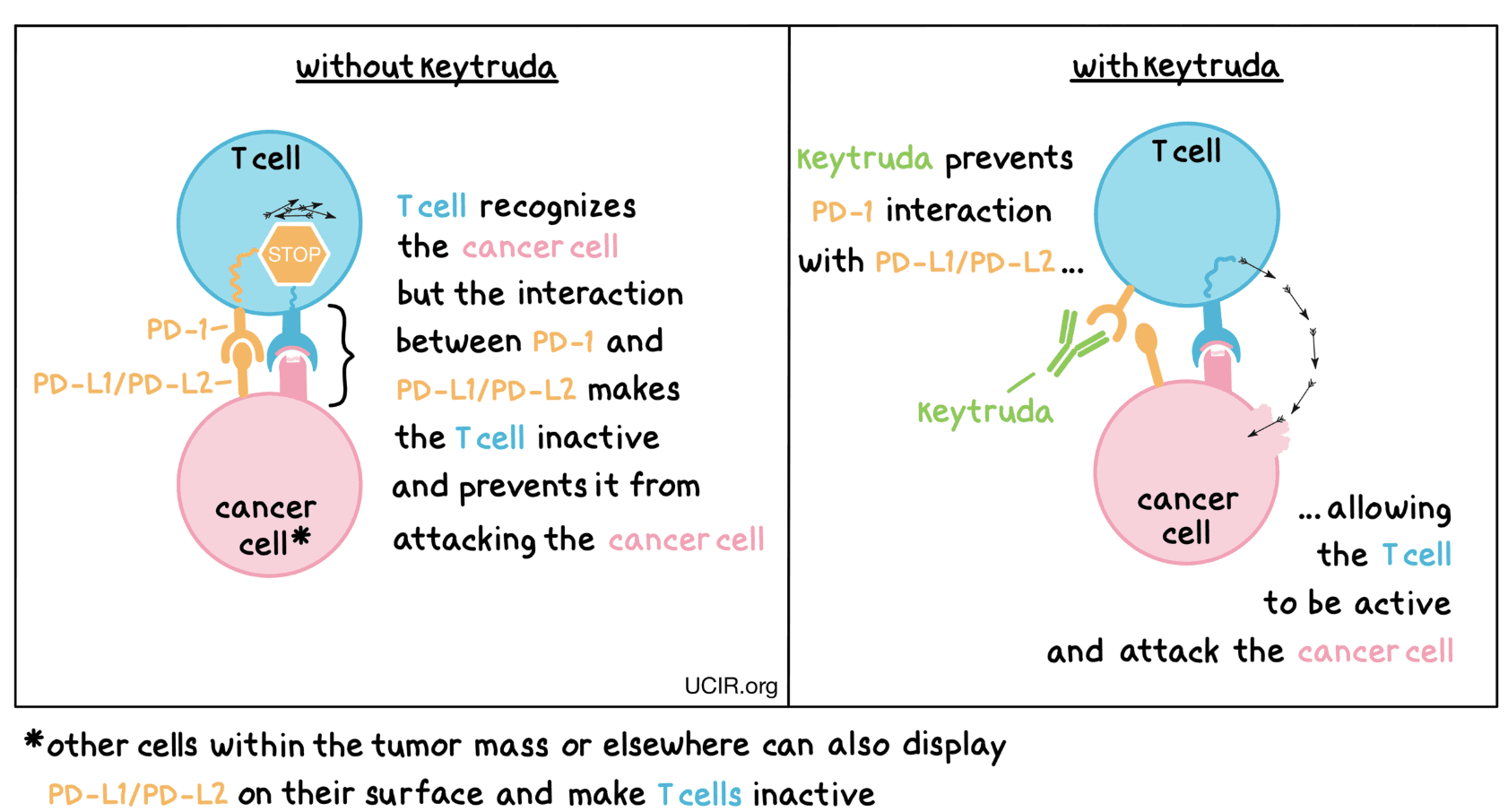
Keytruda is the brand name for pembrolizumab, an immunotherapy drug known as a PD-1 immune checkpoint inhibitor. In plain English, it helps patients’ immune systems recognize and attack cancer cells by blocking a signal some cancers use to dampen the immune response.
Why has Keytruda spending grown so quickly?
Keytruda spending has grown in large part because the eligible population has expanded.
What is notable about Keytruda is its breadth. Since its 2014 approval for advanced melanoma, Keytruda is now approved in the U.S. for more than 40 cancer indications: lung, melanoma, head and neck, renal, cervical, endometrial, breast, gastric, urothelial, mesothelioma, and others. It also has labeled uses in certain blood cancers, including classical Hodgkin lymphoma and primary mediastinal large B-cell lymphoma.
Keytruda is also increasingly used earlier in the treatment path, including perioperative, adjuvant, and neoadjuvant settings. Earlier-stage use in expanded clinical settings has increased the number of eligible members and lengthened the period over which a plan may see related claims.
Taken together, Keytruda is moving from a rare outlier claim to a recurring high-cost oncology workflow.
What challenges does Keytruda present?
Keytruda provides useful insight into several challenges facing the self-funded industry.
First, it makes obvious any data visibility limitations. A Keytruda episode may touch medical claims, outpatient facility claims, professional claims, pharmacy context, diagnosis data, prior authorization, oncology records, surgical events, labs, imaging, and stop-loss reporting. Every stakeholder might see a different slice unless the episode is assembled across systems. The TPA may see medical claims. The PBM may see pharmacy. The stop-loss carrier may receive a high-claimant report. The broker may get a renewal exhibit. The employer may get a top-conditions chart. None of those artifacts automatically answers the important questions:
· Which member is on which therapy?
· What diagnosis and cancer category are driving the treatment path?
· Which costs are drug, facility, professional, lab, imaging, surgery, or inpatient?
· Which benefit channel did the therapy run through?
· Which site of care is being used?
· What is paid, pended, requested, denied, appealed, or reimbursed?
· Which claims count toward the specific deductible and aggregate position?
Second, Keytruda-eligible conditions create timing pressure. High-cost oncology often gives early signals before a claim breaches the specific deductible: diagnosis, biopsy, infusion, surgery, pended claim, medical record request, or prior authorization. Each signal can start an evidence trail before the reimbursement deadline creates urgency, meaning that plans that wait until a threshold is breached lose valuable time.
Third, it creates narrative challenges, particularly for renewals. A broker, consultant, TPA, or carrier must decide and explain whether a large oncology claim is an isolated shock, part of a growing utilization baseline, or evidence of a workflow gap. Underwriters operating with limited data are forced into making conservative assumptions about the unseen portion of the risk.
How the industry may respond
While Keytruda’s growth amplifies many of the challenges facing the industry, it also provides a roadmap for how the industry may evolve in response.
For plans and administrators, better data offers an opportunity to differentiate by identifying high-cost episodes early, connecting medical and Rx context, tracking missing records, packaging stop-loss evidence continuously, and giving brokers a clean explanation before renewal.
For carriers, reporting must increasingly go beyond historical loss experience and into operational control and enablement. Carriers should look for plans and administrators that can provide clean medical/Rx/facility data, timely notices, strong member matching, clear policy-period basis, and source-linked evidence.
For employers and their advisors, the goal is a better claim story. That means going beyond knowing that a large claim happened in favor of knowing what happened, what was controlled, what remains open, and what changes next.
What comes next?
Amera will be interviewing experts in the industry to share how employers can afford life saving drugs for employees without bankrupting plan funds. Follow along to learn more!
About Amera
Amera helps make high-cost claim workflows ready for the teams that must act on them. That starts by turning messy claim inputs - PDFs, bills, receipts, EDI, non-standard submissions, and other source documents - into structured, source-linked claim objects. That standardized data forms the basis of faster and more robust stop-loss reporting for industry partners.
Download the high-resolution PDF of our TPA Ecosystem Map